
Full-containment racing seats add structure around the driver’s head, shoulders, ribs, and hips. Start with the options below, then use the fitment and installation checklist to confirm the exact seat works with the driver, car, restraint system, and rules.
Kirkey 70 Series 16-inch Seat and Cover
A short-track containment-seat option for drivers whose measurements and chassis position match the 16-inch version. Verify the current listing, exact model, seat angle, and whether the seller’s configuration includes the cover and required mounting components.

- The Product Is A 16In 70 Series Seat And Cover
- Easy To Install And Recommended Accessories For Your Vehicles
- Manufactured in Canada
- Fit type: Vehicle Specific

Kirkey 70 Series 17-inch Seat and Cover
The wider version should be considered only after measuring the driver and checking the cockpit. A wider seat is not automatically safer or more comfortable if it compromises belt alignment, side clearance, or the driver’s position.
- The Product Is A 17In 70 Series Seat And Cover
- Easy To Install And Recommended Accessories For Your Vehicles
- Manufactured in Canada
- Fit type: Vehicle Specific
Kirkey 71300 Containment Seat
This listing appeared as a Prime-eligible containment-seat result, but the exact size and configuration must be confirmed on the live detail page before publication. We will not treat the listing as a universal fit.
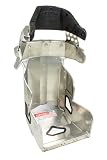
- Package Dimensions: 35.5 L x 14.4H x23.6W (inches)
- Package Weight : 23.25 pounds
- Country of Origin: Canada
- Fit type: Vehicle Specific
What to check before choosing a seat
- Measure the driver. Measure the seated hip width at the widest point and compare it with the manufacturer’s sizing guidance. Do not assume that a 16-inch seat from one manufacturer fits like a 16-inch seat from another.
- Confirm the layback. A 10-degree sprint-style seat and a 20-degree stock-car-style seat put the driver in different positions. Match the seat angle to the car, cage, steering wheel, pedals, and sight line.
- Check head and shoulder clearance. The containment area must support the intended driver without forcing the helmet or shoulders into an awkward position.
- Plan the belt openings and mounts. Verify the 5- or 6-point belt path, seat-mount pattern, rear brace requirements, and any class-specific mounting rules before buying.
- Verify certification and rules. SFI requirements and track rules vary. Confirm the exact model, certification label, expiration or recertification requirements, and the current rules for the series where the car will compete.
Installation and compatibility checklist
- Confirm the seat width and shoulder/head-support position with the driver seated in the actual car.
- Verify that the seat, belt, and head-and-neck restraint work together as a system.
- Follow the seat manufacturer’s mounting and rear-support instructions.
- Check that the seat does not interfere with cage tubes, window net, steering wheel, pedals, or driver extraction.
- Have the final installation inspected by a qualified race-car builder or safety professional when possible.
Bottom line
The best full-containment seat is the one that fits the driver and the car, works with the restraint system, and satisfies the applicable rules. Start with measurements and cockpit geometry, then compare the exact model and configuration—not just the brand name or advertised width.